
Someone Needs to Say Yes: Sarah McNary’s Kidney Donation Story
I first learned about kidney disease and kidney donation when I was 12 years old and living in Canada. I was part of an organization called St. John Ambulance Brigade, and as part of our training, we visited a hospital dialysis ward.

I had never heard of kidney disease. I knew nothing about dialysis, and certainly not the kind of dialysis they had back then. It was awful. I remember seeing how much those patients were suffering, and it made a huge impression on me. It was also the first time I learned that someone could donate a kidney to another person and still live a normal life with one kidney.
I’m a retired high school special education teacher, and I know how formative those years between about 12 and 15 can be. Some experiences just stick with you. For me, that visit to the dialysis ward was one of them. It was startling and so far outside anything I had experienced before that I never really forgot it.
So when kidney donation came into my life again many years later, the seed had already been planted.
It happened at book club. We were talking about the book, laughing and joking like we usually do, and somehow the conversation turned to our friend Mike and his struggle with kidney disease. His wife, Tansy, started to cry.
And I remember thinking, Oh wait. This is it. I can help with this.
I couldn’t fix Mike’s kidney disease or anything that had led him to this point, but I could do something. I could see if I was a match.
In my mind, I wasn’t just donating for Mike anymore. I had already decided I was going to donate a kidney. There were so many people waiting for one, and if I was healthy enough to do it, I wanted to help someone.
Sarah McNary
Mike, however, did not want anyone testing on his behalf. His plan was to go on dialysis and wait for a kidney from a deceased donor. My response was basically, “Well, I’m not married to Mike. I’m a grown woman and I can do whatever I want.”
Eventually, he gave in.
Several of us were tested, including Mike’s sister-in-law, an uncle who turned out to be too old, a niece, Tansy, and me. I knew pretty quickly that Mike and I weren’t a blood-type match, but then I learned about the National Kidney Registry’s Voucher Program.
Tansy was a couple of weeks ahead of me in the testing process. She told me that if she was approved to donate, I wouldn’t need to continue.
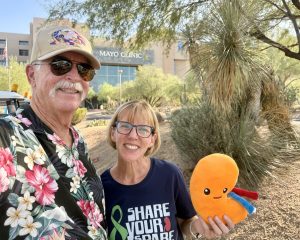
But by then, something had changed for me.
In my mind, I wasn’t just donating for Mike anymore. I had already decided I was going to donate a kidney. There were so many people waiting for one, and if I was healthy enough to do it, I wanted to help someone.
When I first told my husband, he was understandably worried about me. But the more we talked and learned about living donation, the more supportive he became. By the time I had surgery, he was completely behind my decision and became my caregiver during recovery.
My daughter, who is 39, and my son, who is 37, were immediately supportive. They were excited and proud that I was willing to do something that could save someone else’s life.
I also did a lot of homework. I talked with other kidney donors both personally and online, spent time on Mayo Clinic Connect, worked with a donor mentor through the National Kidney Registry, and even spoke with the person who ultimately became Mike’s kidney donor.
I was able to name five people as voucher holders, meaning that if any of them ever needs a kidney transplant, they can redeem their voucher to be matched with a living donor.
Sarah McNary
On July 29, 2026, I donated my kidney through the Family Voucher Program. I was able to name five people as voucher holders, meaning that if any of them ever needs a kidney transplant, they can redeem their voucher to be matched with a living donor. I put Mike at the top of my list, along with my CPA, who has Stage 3 kidney disease, my husband, and my two children.
My recovery was amazingly easy. I was up and walking the same day as surgery and walked out of the hospital the next day. Four and a half weeks later, I felt terrific.
The hardest part of recovery was actually remembering that I was recovering. I felt so good and had so much energy that I had to remind myself that my body had just been through major surgery and still needed time to heal.
Through all of this, I felt remarkably peaceful about my decision.
And I feel pretty strongly that this whole experience really hasn’t been about me. Maybe it wasn’t even about Mike.
My kidney ultimately went to someone in Wisconsin whom I have never met. I sometimes think that perhaps this whole chain of events happened because that person needed someone to say yes.
I released my information to my recipient, so if they ever want to reach out to me, they can.
Mostly, I just hope they’re doing well.
About the Author
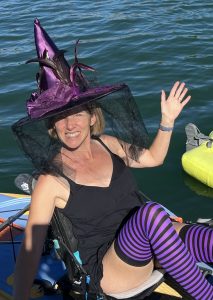
Sarah McNary is a retired special education teacher, wife, mother, grandmother, author, and lifelong learner. In July 2026, she became a living kidney donor, an experience that inspired her to share her story and help others better understand living donation. She enjoys knitting, quilting, painting, reading, traveling, kayaking, and spending time with family.