
This Journey Changed Me in Ways I Never Expected: Keith Baldinger’s Kidney Donation Story
I have spent most of my life fixing things: buildings, equipment, projects, problems. If something broke, you worked harder, thought differently, figured it out, and moved forward. That mindset shaped who I became as a husband, father, project manager, and leader.
But polycystic kidney disease (PKD) does not care how hard you work.
My wife Erin only learned she had PKD about 10 years before she needed a transplant. By then, we had already built a life together. We had been married for 26 years when she finally received her kidney.
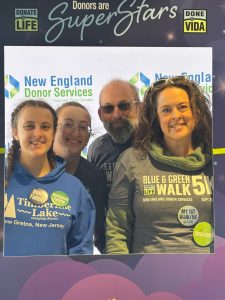
Sometimes I wonder if things would have been different if we knew earlier. Maybe we would have prepared differently. Maybe we would have worried longer. Maybe it would have changed nothing at all except adding more years of fear to the journey. What I do know is that once PKD entered our lives, it slowly changed everything.
PKD is a slow killer. Most people cannot tell someone has it just by looking at them. They look normal, but they carry physical pain, exhaustion, fear, and emotional weight every single day.
There is no cure. Yet. But I believe there will be before my daughter ever needs a kidney.
The PKD Foundation is fighting for that future every day through research and awareness. My daughter was diagnosed when she was 20 years old after doctors became concerned about her blood pressure. Because of Erin’s history, they knew what to look for.
PKD is hereditary. If a parent has it, there is a 50% chance their child will inherit it. Those odds suck. And they do not help the depression and guilt a mother with PKD already carries.
I watched Erin carry that weight, too. Not just fear for herself, but fear that she had passed something painful down to one of our children.
But my daughter is going to be fine. She has awareness, monitoring, treatment options, and hope that previous generations did not have.
In April of 2024, Erin officially made the transplant list. That made everything real in a different way. Up until then, transplant was something we talked about in the future tense. Suddenly it became appointments, testing, planning, timelines, phone calls, and waiting. For the first time, transplant was no longer a possibility—it was a necessity.
People call kidney donation selfless. Honestly, for me it felt selfish. I donated because I wanted to save the person I love most in this world: my wife, my best friend, my soulmate. There was never a moment when I questioned whether I would do it.
But every test reminded me why I was doing it. Because when the person you love is suffering, you stop thinking about sacrifice and start thinking about time. More time together. More memories. More life.
Keith Baldinger
When we learned about the National Kidney Registry Voucher Program, it became a no-brainer. The idea that I could donate now and create a path for Erin to receive a kidney when she needed it made complete sense to me.
The funny part is that if you really want to find out what might be wrong with you, volunteer to donate an organ. They took what felt like gallons of blood, scanned everything imaginable, tested every system in my body, and even decided my appendix looked odd and needed to come out too. I went in planning to lose a kidney and somehow ended up feeling like they were doing a full inventory while they were at it.
But every test reminded me why I was doing it. Because when the person you love is suffering, you stop thinking about sacrifice and start thinking about time. More time together. More memories. More life.
After all the testing and appointments, it was finally surgery day. I arrived at the hospital at 5:00 AM on Tuesday, December 3, 2024. Giving Tuesday. That seemed appropriate.
The nurses and doctors at UMass Memorial Medical Center in Worcester, Massachusetts were phenomenal. They made what should have felt overwhelming somehow feel manageable.
Honestly, the surgery itself was easier than everything it took to get there. I was home the next day, back in my own bed by around 3:00 PM. A little sore, tired, but doing pretty well.
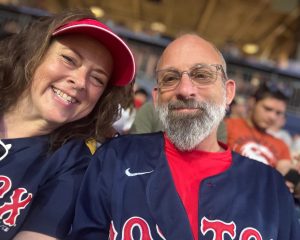
Two and a half weeks later I was back at work. As soon as they said I could drive, I was back in the office.
Then five weeks after I donated, Erin got the call. Holy crap … that was fast.
I do not really pray. Never have. But I prayed that night. I prayed that it would work. That after all the years of fear and uncertainty, this was finally the moment things would change.
And they did. On January 28, 2025, Erin got her new kidney.
A year and a half later, it could not be going better.
Her labs are good. Her energy is back. She smiles differently now. She is the woman I fell in love with again, not the person curled up on the couch unable to move because the depression and exhaustion had convinced her she was dying.
So I became the positive one. The fixer. The guy constantly saying, “We can fix this. You’re not going to die.” Sometimes because I believed it. Sometimes because one of us had to.
People hear “living organ donation” and think it must be impossible, overwhelming, or life-changing in a negative way.
Was it a commitment? Absolutely. Was it emotional? Of course. But in the big picture of life, it was easier than watching someone I love suffer while feeling helpless.
Was it a commitment? Absolutely. Was it emotional? Of course. But in the big picture of life, it was easier than watching someone I love suffer while feeling helpless.
Keith Baldinger
The testing took longer than the recovery. The fear was worse than the surgery. And if given the choice again, I would do it all over tomorrow.
This journey changed me in ways I never expected. It changed the way I look at life, family, purpose, and time. I used to think strength meant always being the person who could fix everything. Now I think strength is being willing to show up for people even when you are scared too.
Looking back, I am grateful not only for the donation and transplant process, but for the incredible people who guided us through it. The transplant team, nurses, physicians, coordinators, and support staff at UMass Memorial cared for us during one of the most important chapters of our lives, and we will never forget that.
There are thousands of people waiting for a transplant right now, hoping for the phone call that changes everything. Someone choosing to become a donor gave my wife her life back. If you could help save someone you love, would you? For me, the answer was easy.
About the Author
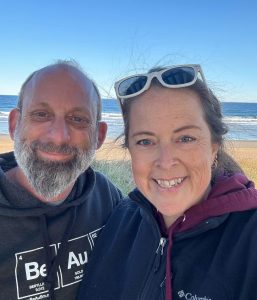
Keith Baldinger lives in Shrewsbury, Massachusetts, with his wife Erin, where they raised their two daughters and built a life rooted in family, community, and service. A lifelong fixer of things, Keith has spent more than 30 years in construction, facilities management, and municipal government. Today, he works in local government, helping improve services and quality of life for residents in the community he calls home. In 2024, Keith became a living kidney donor through the National Kidney Registry Voucher Program to help his wife Erin in her battle with polycystic kidney disease (PKD). Since then, he has shared his family’s story to raise awareness about living donation, organ donation, and PKD. When he is not working, Keith enjoys spending time with his family, woodworking, camping, and tackling projects that keep his hands busy. He believes that while no one person can solve every problem, acts of kindness and generosity can change someone’s life forever.