
I Used to Think Donation Meant a Pink Dot on My Driver’s License: Maggie Jacobs’s Kidney Donation Story
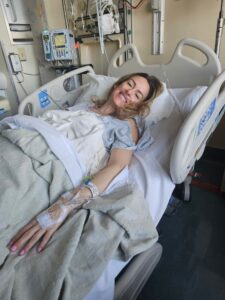
In 2018, my husband was diagnosed with focal segmental glomerulosclerosis (FSGS). At the time, we were told a transplant might be needed in six to 10 years. That felt far away, like something we would prepare for later.
Back then, kidney donation meant one thing to me: a pink dot on my driver’s license.
By March 2024, that distance disappeared. His doctors told us it was time to list him for transplant. In California, the average wait for a deceased donor kidney was five to nine years. We did not have that kind of time. His health was declining quickly, and the urgency was impossible to ignore.
Dialysis was discussed as the next step. It is a life-sustaining therapy, but it does not restore kidney function or reverse disease. We were not a match, and time mattered. We knew we needed to explore every available option and move quickly.
I spent 17 years as an executive assistant to CEOs. I’m wired to be resourceful. When something matters, I figure out a way forward. So we shared our story, loudly and honestly.
When you share your story in a way that truly lands, people who feel called step forward. Every person navigating transplant deserves to know that.
Maggie Jacobs
This part matters. We did not ask anyone for a kidney. We gave ourselves permission to be open about what we were facing. When you share your story in a way that truly lands, people who feel called step forward. Every person navigating transplant deserves to know that.
In October 2024, my husband received a living donor kidney.
Before his transplant, he was walking with a cane. Watching someone you love lose their independence is devastating. A week before his one-year kidneyversary, he was playing flag football for hours with people in their 20s and 30s. That is the difference a living donor makes. Not just life extended, but life restored.
Seeing that transformation changed me. We got our joy back. Our freedom. Our ability to imagine the future again. Once you experience that kind of gift, the question becomes unavoidable: how could I not do the same for someone else?
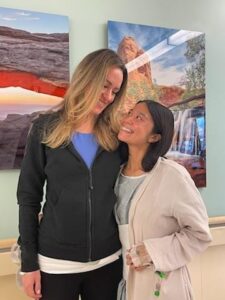
I had already begun the donor evaluation process at multiple transplant centers. Once my husband’s donor was approved, I paused so I could be fully present as his caregiver. After he recovered, I resumed my evaluation. I was cleared in January 2025, and my surgery was scheduled for February 25.
Throughout the evaluation, I was reminded again and again that this was my choice. I could pause, ask questions, or walk away at any point, and my care team would support me either way.
During one of my testing appointments, I learned more about my recipient. I was told she was a 30-year-old woman and that my kidney would be staying onsite. I took that in quietly. Knowing the kidney wasn’t being shipped made it feel closer and more real, but I stayed focused and trusted the process.
Access, timing, and coordination make an enormous difference in transplant journeys, and national pathways can open doors that otherwise stay closed.
On the day of surgery, the most unexpected moment happened in the waiting room.
Scott noticed a surgeon speaking with a large group of people and heard the word “transplant.” Something clicked. He sat down next to someone and asked, “Is this for a kidney transplant?” The person said yes. Scott paused, then asked, “Is it for a 30-year-old female?”
The man looked at him and said, “How do you know that?”
Scott replied, “I think the donor is my wife.”
The room broke open. Tears everywhere. People hugging him. Someone thanked him. Scott kept saying, “I didn’t do anything. My wife is the donor. Not me.” Their daughter was still in surgery, and everyone understood exactly what was happening.
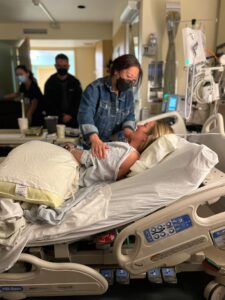
Not long after, her parents asked if they could come up and meet me in my hospital room while their daughter was still in surgery. They wanted to meet the person who had just given their daughter a second chance at life. Our rooms ended up sharing a wall. Strangers hours earlier, now connected forever. Not a dry eye anywhere. A video captured that meeting beautifully.
My recovery was smooth. By week four, I felt ready to return to the gym, though I followed medical guidance and waited. Today, I work out regularly and live a full, active life with one kidney. I continue to be monitored, I’m healthy, and my medical team remains invested in my long-term well-being.
Not long after my donation, I received a call from the transplant center where my husband had been a patient. A surgeon said, “We haven’t met, but your reputation precedes you. We’re looking for a donor champion, and everyone mentioned you.”
That call changed my trajectory.
I left my 17-year career as an executive assistant to CEOs and stepped fully into this work. Pain became purpose. Fear became action. I now help recipients and families navigate how to find a living donor, and I’m returning to school for nursing to deepen that impact. This journey strengthened my commitment to making sure no one has to navigate the transplant process alone.
If someone reading this feels curious rather than certain, that curiosity is enough to take the first step.
About the Author
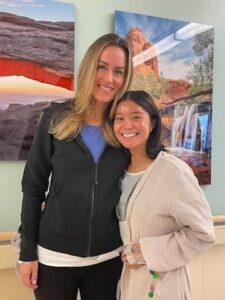
Maggie Jacobs is a living kidney donor, caregiver, and national transplant advocate. Her path to donation began when her husband was diagnosed with end-stage renal disease, immersing her in the realities families face when navigating kidney failure and transplant options. Through her own donor journey, Maggie experienced firsthand how access, education, and timing can make a life-changing difference. She is the founder of AgentKidney.com, a free resource and coaching platform created to ensure no one has to navigate the transplant journey alone. Agent Kidney supports recipients, caregivers, and potential living donors with clear information, practical guidance, and compassionate, human-first coaching at every stage of the process.